
Understanding the difference between a grease that survives heat and one that simply hasn’t failed yet — and what to look for when your equipment runs at the limits.
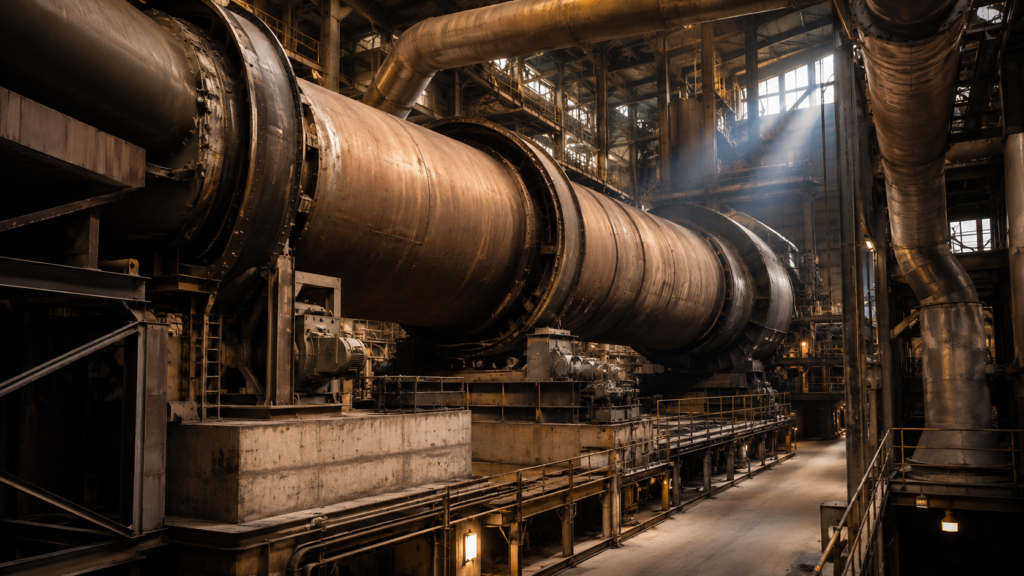
Walk through any plant where temperatures climb past 200°C — cement kilns, glass works, steel mills, baking ovens, recycling lines — and you will find the same conversation happening between maintenance teams and lubricant suppliers. It usually begins with a single number: the dropping point.
Dropping point is the temperature at which a conventional grease softens enough for a drop of base oil to fall from the test apparatus. For decades, it has been treated as the headline figure that defines a grease’s high-temperature capability. The higher the number, the better the grease — or so the logic goes.
The reality is more nuanced, and for engineers running equipment at extreme temperatures, the distinction matters. A high dropping point tells you when a grease fails. It does not tell you how a grease behaves in the hours, days and months before that failure. And in heavy industry, behaviour is what protects equipment.
This is where the term “non-melting” enters the discussion — and where most specifications get it wrong.
The Mechanics of Grease Failure at High Temperature
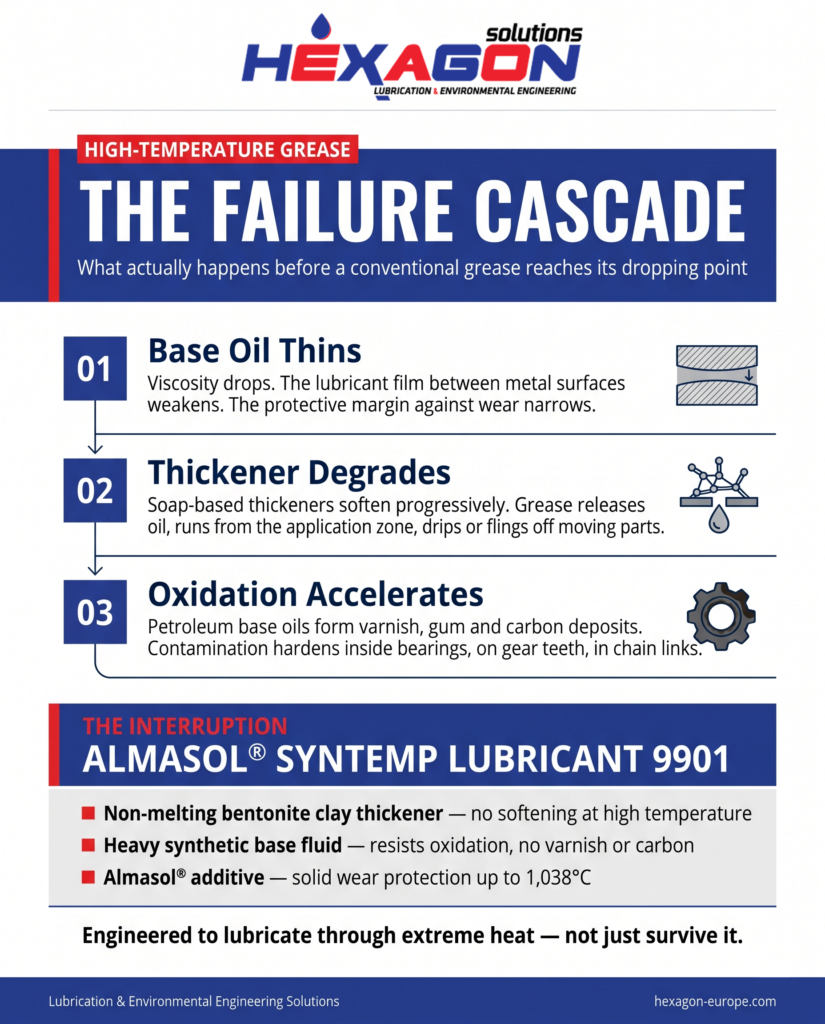
A conventional grease is, simply put, an oil held in place by a thickener. The thickener acts as a sponge. When temperatures rise, three things begin to happen in sequence.
First, the base oil thins. Viscosity drops, the lubricant film between metal surfaces becomes weaker, and the protective margin against wear narrows.
Second, the thickener structure begins to degrade. Soap-based thickeners — lithium, calcium, aluminium complex — soften progressively as they approach their dropping point. The grease releases oil more readily, runs from the application zone, and starts to drip or fling off moving parts.
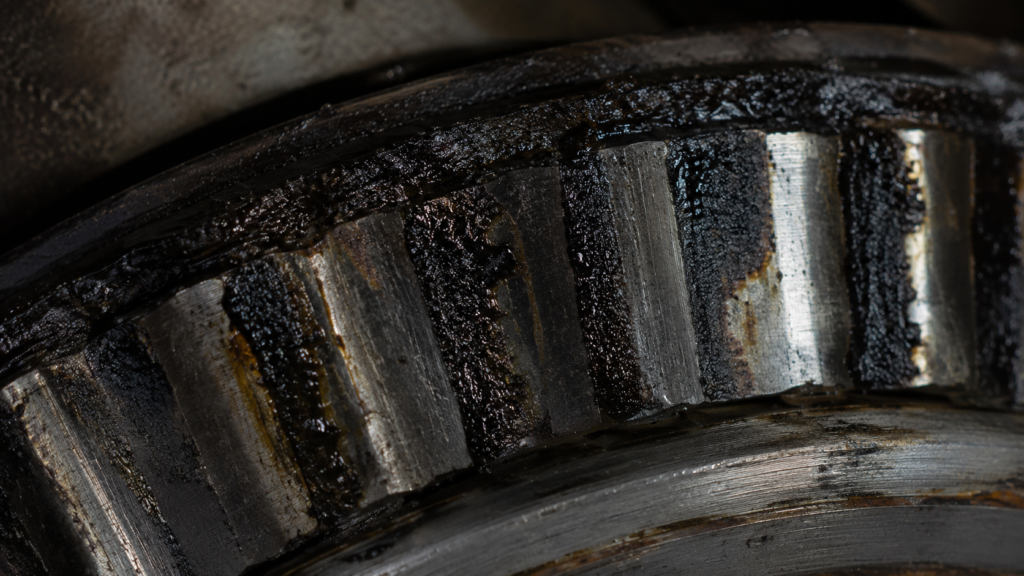
Third, oxidation accelerates. Petroleum base oils exposed to sustained high temperatures form varnish, gum and eventually carbon deposits. These deposits harden inside bearing housings, on gear teeth, and in chain links — creating abrasive contamination in the very components the grease was supposed to protect.
By the time a conventional grease reaches its dropping point, the equipment has already endured weeks or months of progressive lubrication failure. The dropping point marks the end of a long decline, not the beginning of a problem.
What “Non-Melting” Changes
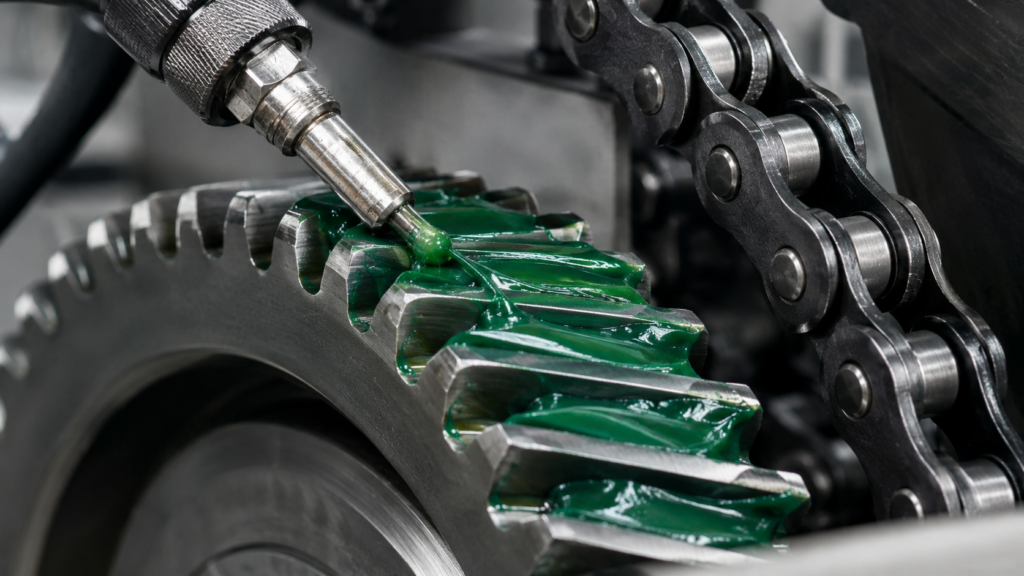
A non-melting grease uses a thickener that does not have a melting transition in any practical operating range. Inorganic thickeners such as bentonite clay — the thickener system used in Almasol® Syntemp Lubricant 9901 — do not soften progressively as temperatures rise. They retain their structure, hold the base oil in place, and continue to deliver lubricant to the wear surface at temperatures where soap-based greases would have long since liquefied and drained away.
This is why the technical data sheet for 9901 lists “Non-melt” rather than a numerical dropping point under ASTM D2265. The test method does not produce a meaningful result, because the failure mode the test is designed to detect does not occur.
But thickener chemistry alone is not enough. A non-melting structure that holds the wrong base oil in place is still a failed lubricant — because the oil itself must survive the heat.
This is why 9901 pairs its bentonite clay thickener with a very heavy synthetic base fluid. The fluid carries a viscosity of 7,630 cSt at 40°C and 210 cSt at 100°C, and a flash point of 204°C (400°F). Synthetic chemistry resists oxidation far more effectively than petroleum, which means the lubricant continues to perform without forming the varnish, gum and carbon deposits that contaminate equipment over time.
The combination matters. Non-melting thickener plus oxidation-resistant synthetic fluid plus a wear-reducing additive system produces a grease that does not simply survive extreme temperatures — it continues to lubricate through them.
The Role of Solid Wear Protection
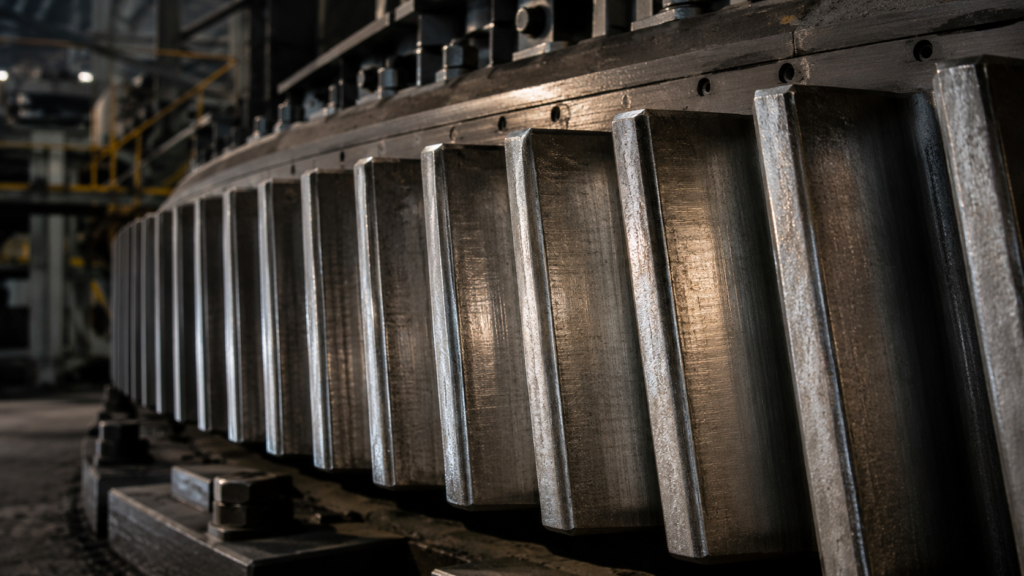
Even with the right thickener and the right base oil, metal-to-metal contact remains a risk in heavily loaded, slow-moving applications: kiln girth gears, large open gears, oven chains, low-speed plain bearings. These components experience boundary lubrication conditions where fluid film alone cannot separate the surfaces.
Almasol® Syntemp Lubricant 9901 addresses this through Lubrication Engineers’ proprietary Almasol® additive — a solid wear-reducing material that withstands extremely heavy loads, chemical attack, and temperatures up to 1,900°F (1,038°C). Almasol is attracted to metal surfaces, where it forms a microscopic protective layer. Crucially, it does not build on itself or affect equipment clearances.
The result is measurable in standard testing. The Timken OK Load value of 45 lb (ASTM D2509) reflects the load-carrying performance the additive system delivers, while the oxidation test result of 3 psi pressure drop over 100 hours (ASTM D942) confirms the long-term stability of the formulation under heat.
Where the Difference Shows Up in Service
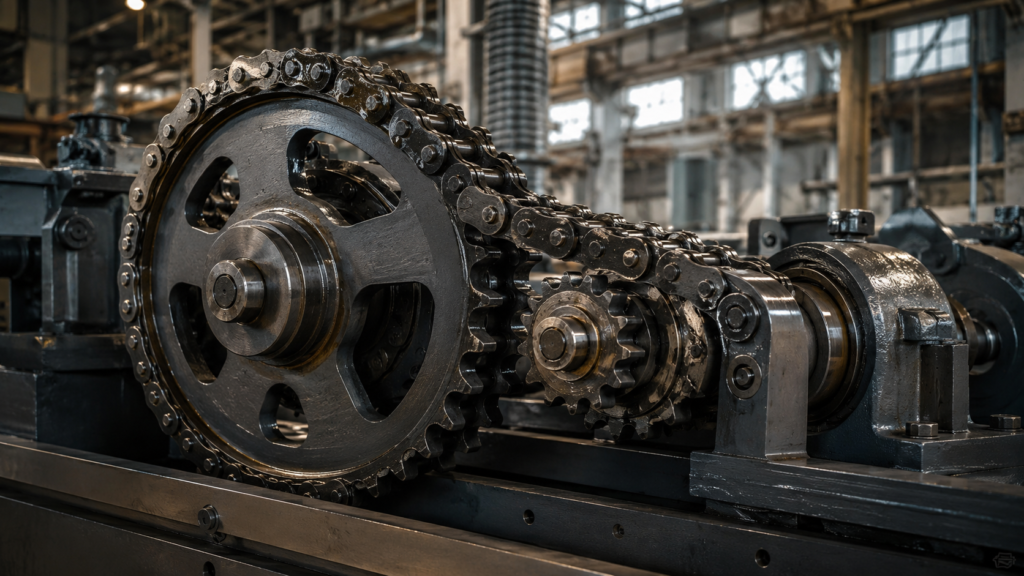
In practical terms, equipment lubricated with a non-melting synthetic grease behaves differently from equipment running on conventional product.
Open gears retain a tacky, adherent lubricant film rather than throwing grease off the teeth as temperatures climb. Oven chains continue to articulate freely instead of seizing on hardened deposits. Large, slow-moving bearings stay protected during the boundary lubrication conditions that dominate at low speeds and high loads. Components exposed to washdown, steam or condensate retain their lubricant film rather than emulsifying or being washed away.
For maintenance teams, the operational consequences are equally meaningful: longer regreasing intervals, fewer unplanned shutdowns to address lubrication-related failures, less wear debris in component housings, and reduced contamination of surrounding equipment from melted or thrown-off grease.
The Right Question to Ask
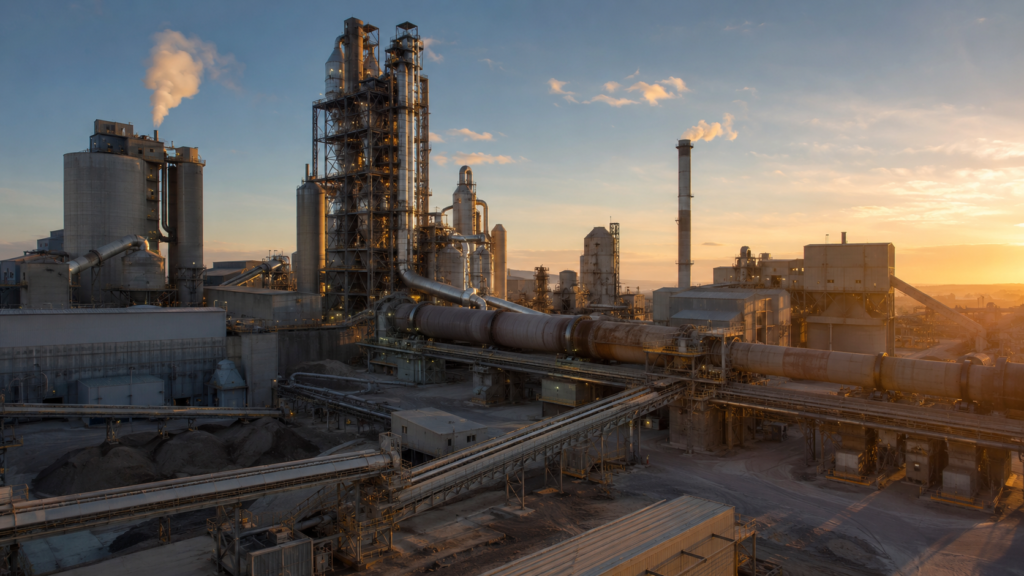
When evaluating a high-temperature grease, the more useful question is not “what is the dropping point?” but “what is the failure mode, and at what temperature does it begin?”
A grease engineered with a non-melting thickener, a heavy synthetic base fluid, and a proven solid wear-reducing additive does not have a failure point in the conventional sense. It has an operating envelope — and within that envelope, it continues to do its job.
For plants running kilns, ovens, large open gears, sliding surfaces, slow-speed bearings or any equipment exposed to sustained extreme heat, that distinction is the difference between scheduling maintenance and recovering from breakdowns.
Almasol® Syntemp Lubricant 9901 is engineered for the equipment where conventional greases quietly fail — kiln girth gears, large open gears, oven chains, sliding surfaces and slow-moving bearings operating at sustained extreme temperatures. If you would like to evaluate 9901 in your application, or talk through the technical specifications with someone who knows the chemistry, the team at Hexagon Europe is one message away. Get in touch for a sample, a technical consultation, or a site visit.
