
What fuel suppliers control, what operators can influence, and why a well-formulated fuel improver has become a meaningful variable in diesel performance.
Diesel engines are deceptively simple machines. Compress air to a high enough temperature, inject fuel into it, and the fuel ignites without a spark. Everything else — power output, fuel economy, emissions, injector wear, cold-weather starts, long-term engine condition — flows from how cleanly and consistently that ignition happens, thousands of times per minute, across every cylinder.
For operators of trucks, marine engines, off-road equipment, stationary generators and bulk fuel storage, the question that matters is not how the engine works in theory. It is which variables in real-world operation actually move the needle on performance and cost. Three fuel properties dominate that list: cetane number, lubricity, and detergency. Each one is partially controlled by the fuel supplier — and each one can be meaningfully influenced by what the operator adds to the tank.
Understanding these three properties is the starting point for understanding why a fuel improver such as Full Torque™ Diesel Fuel Improver from Lubrication Engineers has earned a place in the operational specifications of demanding fleets.
Cetane Number: How Quickly the Fuel Ignites
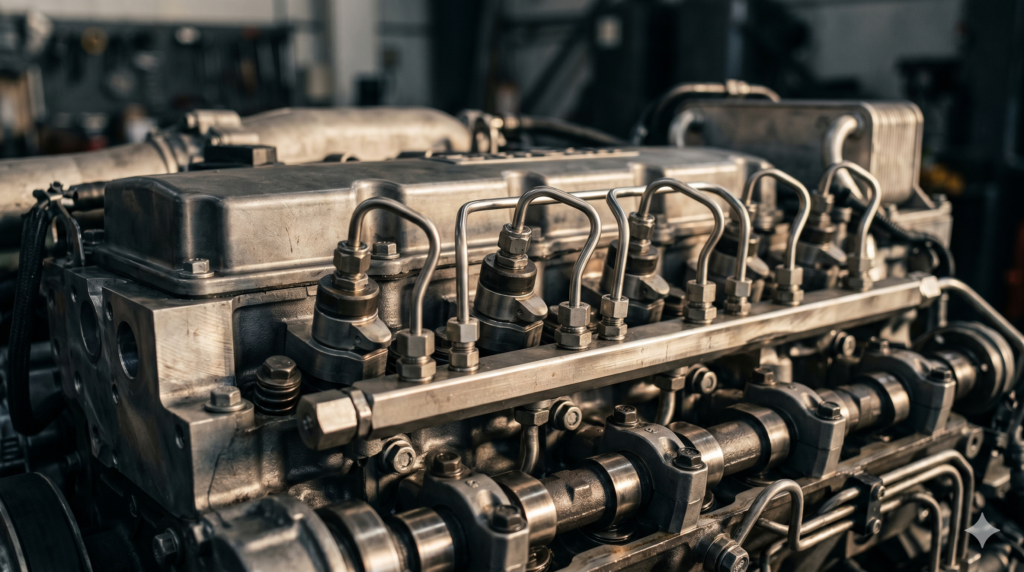
Cetane number measures how readily diesel fuel ignites under compression. The higher the number, the shorter the delay between injection and ignition. A short ignition delay produces a smooth, controlled combustion event. A long ignition delay produces the opposite: a sudden, harder pressure rise as a larger quantity of fuel ignites at once, generating noise, vibration, incomplete combustion, and visible smoke at startup.
Most pump diesel sits in the lower end of the acceptable cetane range. It meets the standard, but it does not optimise the engine.
Full Torque includes a cetane booster that increases a fuel’s cetane number by up to three points. In service, this translates to faster ignition timing, easier cold starts, less smoke at startup, smoother running under load, reduced engine noise, and more complete combustion across the operating range. None of these effects is dramatic in isolation. Together, they are the difference between an engine that runs acceptably and one that runs the way it was designed to run.
Lubricity: The Property That Quietly Disappeared
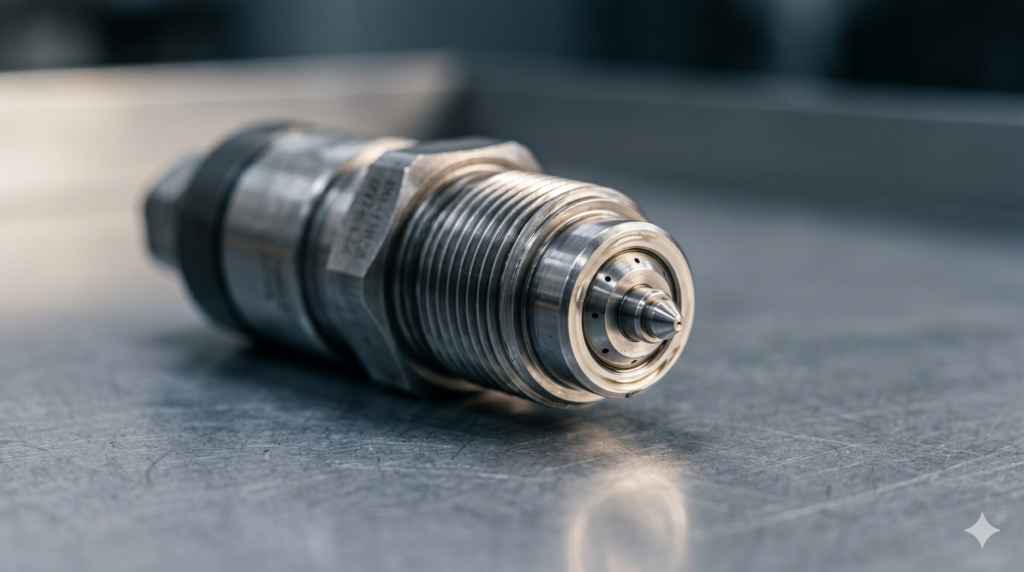
For decades, the sulfur compounds present in diesel fuel provided incidental lubrication for fuel pumps and injectors. The transition to ultra-low-sulfur diesel (ULSD) — driven by emissions regulation — removed most of those compounds, and with them, much of the fuel’s natural lubricity. Modern injection systems, particularly high-pressure common rail systems operating at pressures exceeding 2,000 bar, are now more dependent than ever on the fuel itself to lubricate the precision components it passes through.
This is one of the quieter shifts in diesel operation over the last twenty years. Fuel pump and injector wear that would have been rare on the diesel of an earlier era is now a measurable maintenance cost — and the cost is not always recognised as a fuel-related issue.
Lubricity performance is measured under ASTM D6079 and D7688 using the High-Frequency Reciprocating Rig (HFRR), which produces a wear scar value: lower is better. Full Torque has been HFRR-tested in both winter and summer formulations, and produces a meaningful reduction in wear scar compared with untreated ULSD. In operational terms, this means lower fuel pump wear, longer injector life, and protection of the most expensive components in the fuel system.
Detergency: Keeping the Injectors Doing Their Job
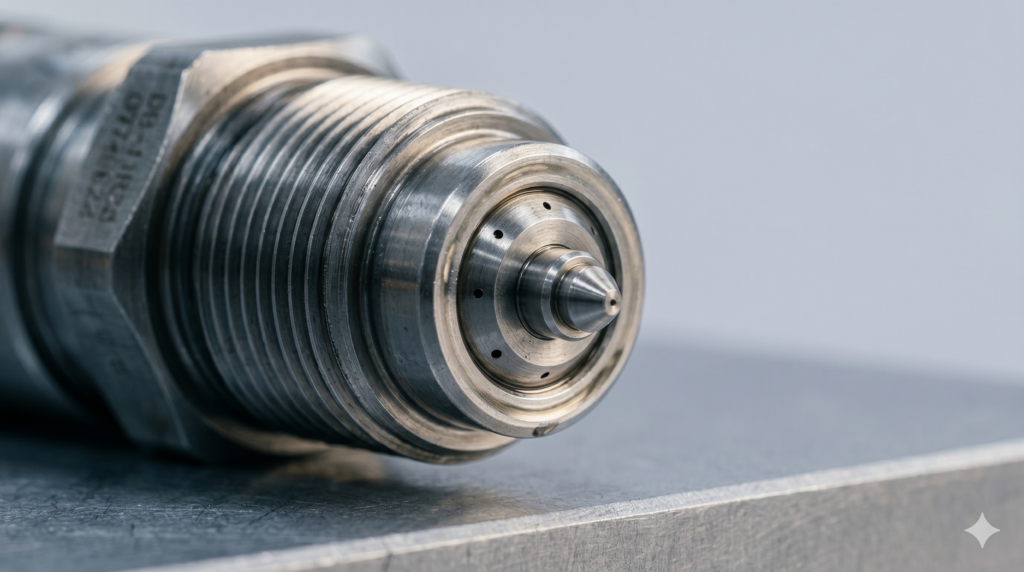
Modern diesel injectors are precision instruments. Spray patterns are calibrated to atomise fuel evenly across the combustion chamber, ensuring complete and efficient burn. Even a small accumulation of deposits on the injector tip distorts that pattern. Atomisation degrades, fuel reaches the cylinder walls instead of mixing with air, combustion becomes incomplete, and the consequences appear as reduced power, lost fuel economy, and increased emissions.
Detergent additives in the fuel address this on two timescales. With consistent use, they keep clean injectors clean. Where deposits have already formed, they progressively remove them, restoring the injector to closer to its original spray pattern. Full Torque is formulated to perform both functions, and its fuel stability performance is documented under ASTM D6468, the high-temperature stability test for middle distillate fuels.
The Fourth Variable: What Lives in the Fuel Tank

Beyond the three combustion-related properties, a fourth issue affects every diesel operation that stores fuel: water and microbial contamination.
Water enters fuel tanks through condensation, breathing as ambient temperature changes, and occasionally through deliveries. It settles to the bottom of the tank, forming an interface with the fuel above. That interface is exactly the environment where diesel-degrading microorganisms — bacteria and fungus — thrive. The result is microbial sludge that clogs filters, accelerates tank corrosion, and contaminates the fuel reaching the engine. The problem is significantly more pronounced in biodiesel blends, which are more hygroscopic and more biologically available than petroleum diesel alone.
Full Torque addresses this chain at the source by disrupting the water-fuel interface where microbial colonies establish themselves. Combined with corrosion inhibitors that protect tanks and fuel lines, this extends usable fuel storage life and reduces the contamination-driven failures that show up as filter changes, injector replacements, and unplanned downtime.
Two Formulations for Year-Round Operation

Full Torque is supplied in two versions to address the seasonal variation that affects diesel operations across most climates.
Full Torque™ S Diesel Fuel Improver (2421) delivers the cetane, lubricity, detergency and corrosion-protection benefits described above for year-round operation in moderate temperatures.
Full Torque™ W Diesel Fuel Improver (2411) provides the same performance profile and adds cold weather management: easier cold starts, prevention of fuel gelling through wax crystal control, reduced cold filter plugging point, and inhibition of ice formation in the fuel system. It is recommended for use when temperatures are at or below 1.7°C (35°F).
Both versions are formulated to work with current fuel specifications — biofuels, ULSD, and renewable diesel — and contain no metals or ash-forming components, in line with Truck and Engine Manufacturers Association preferences. Both are registered with the U.S. EPA and treat fuel at a 1:400 ratio.
What This Means in Operation

For a fleet operator, a marine engineer, an off-road equipment manager, or anyone responsible for bulk diesel storage, the operational implications are practical: smoother engine running, improved fuel economy, longer injector and fuel pump life, fewer filter changes, more stable stored fuel, and reliable cold-weather starts. None of these is a single dramatic outcome.
Full Torque™ Diesel Fuel Improver is engineered for operations where fuel quality quietly shapes performance and cost — fleets, marine engines, off-road equipment, stationary generators and bulk diesel storage.
If you would like to evaluate Full Torque™ in your operation or talk through the right formulation with someone who knows the chemistry, the team at Hexagon Europe is one message away. Get in touch for a sample, a technical consultation, or a fleet trial.
